Why Does a COB LED Studio Light Have a Long Lifespan?

Time:2026-09-25 Author:Aria
0%

A COB LED studio light can run for years, but its lifespan is not determined by the LED chip alone. The U.S. Department of Energy’s 2011 report, LED Luminaire Lifetime: Recommendations for Testing and Reporting, explains why lumen maintenance and component failure both matter. In practical terms, the light may still turn on while its output has already faded. That distinction is easy to miss.

So, what is the lifespan of a cob led studio light? Many products are rated around 30,000 to 50,000 hours, but that figure is a manufacturer’s estimate, not a promise of trouble-free operation. IES LM-80 testing measures LED package lumen maintenance under defined conditions, while TM-21 provides a method for projecting that performance. Neither standard guarantees the life of the complete fixture, including its driver, fan, wiring, and power supply. Heat is relentless. A blocked vent, dusty fan, or repeated high-output session can raise internal temperatures and stress those parts. A well-designed heatsink helps, but it cannot correct poor airflow or careless handling.

For a working studio, lifespan also depends on duty cycle and maintenance. Eight hours of daily use sounds modest; over time, it adds up. Yet converting a rating into years can be misleading, because real fixtures face warm rooms, transport, and uneven cooling. I would treat the published hours as a useful benchmark, not a countdown. The small print matters. Compare the test conditions, warranty, cooling design, and replacement-part support before relying on a single lifespan number.
Why Does a COB LED Studio Light Have a Long Lifespan?

What COB Means: Multiple LED Dies Mounted on One Substrate

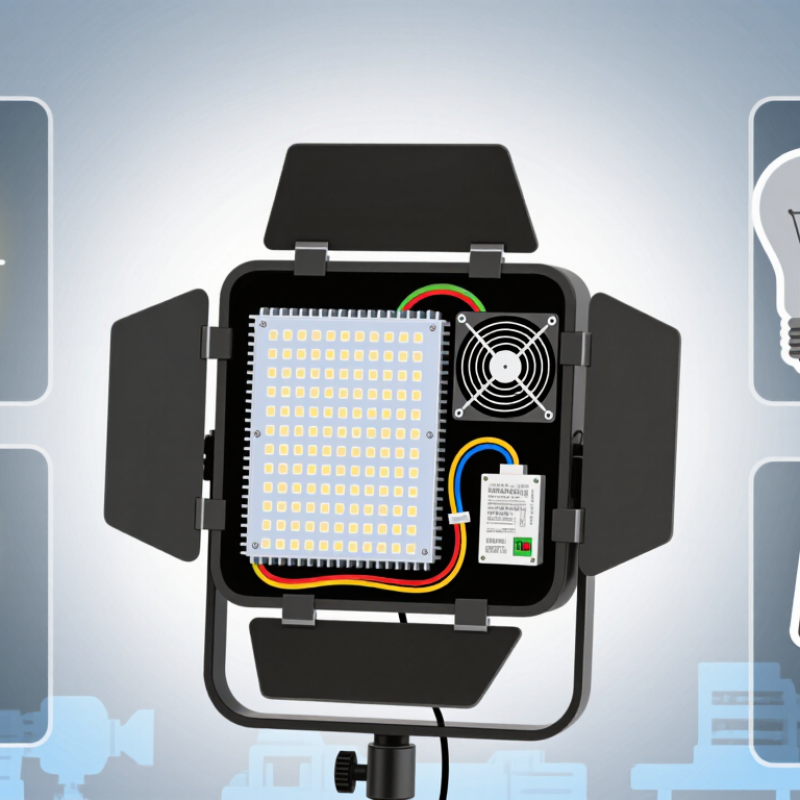
COB means “chip on board”: many small LED dies are mounted directly onto one substrate, rather than packaged as separate bulbs. Under a diffuser, they appear as a compact, continuous light-emitting surface. Think of a close-packed grid of tiny yellow-white points, not one oversized diode. This arrangement can produce strong, even output from a small studio fixture. The details matter.

With the dies close together, heat gathers in a limited area. The substrate and fixture’s heat sink must move that warmth away from the LED junctions. Lower operating temperatures generally help LEDs retain output longer, but COB construction alone does not guarantee a long lifespan. Driver quality, ventilation, brightness settings, and dust around cooling openings all count. Feel the housing after a long shoot: warmth is normal; blocked airflow is not.

COB can reduce visible gaps and harsh point sources, which is useful when filming reflective objects or skin. A diffuser softens the beam, though it may lower output slightly. This is the neat part—and the catch. Dense placement makes thermal design less forgiving, so a heat spreader or sensible brightness setting may matter more than the label. I would not judge lifespan from COB alone; check rated hours and test the light during real sessions.

How Thermal Design Limits Heat-Driven LED Degradation

Heat is the main enemy of a long-lived COB LED studio light. Its tightly packed chips generate heat in a small area. If that heat cannot escape, the LED junction temperature rises, accelerating lumen loss and color shift. A sound thermal path moves heat from the chip through the circuit board and thermal interface into a metal heat sink. Open vents and clear airflow help the heat leave. Small details matter: dust between fins can quietly reduce cooling.

The U.S. Department of Energy’s 2011 report, LED Luminaire Lifetime: Recommendations for Testing and Reporting, explains why lifetime figures need context. A 50,000-hour rating commonly describes projected time to L70, when output reaches 70% of its initial level. It does not promise that every component will operate for that long. The LED may still shine, but a hot driver or failing fan can end a shoot early. Thermal design protects the whole fixture, not just the COB emitter.

Tips: Keep vents clear, avoid enclosing the light, and leave space around its heat sink. After a long session, check whether the housing feels unusually hot or the fan sounds strained. These checks are imperfect, but useful. A cool exterior alone cannot confirm a safe junction temperature; internal measurements provide better evidence.

What LM-80 Measures: Lumen Maintenance Over 6,000+ Test Hours

Why Does a COB LED Studio Light Have a Long Lifespan?

A long-lasting COB studio light depends on more than its advertised hours. One useful reference is LM-80, a standardized test for measuring lumen maintenance in LED packages, modules, or arrays. It tracks how much light an LED source continues to produce over time. The test runs for at least 6,000 hours under controlled conditions, with measurements taken at set intervals. That is a long stretch of steady operation.

Test conditions matter. Temperature and drive current are controlled, so results can be compared more consistently. If a source begins at 10,000 lumens and later produces 9,000, its measured lumen maintenance is 90 percent. LM-80 may also record changes in color characteristics. It does not test every part of a complete studio light, though. The driver, cooling system, and housing can affect real-world performance.

Read the numbers with care. LM-80 data helps describe LED-source performance, but 6,000 test hours do not promise a fixture will last a specific number of years. Longer-term estimates may use TM-21 calculations based on LM-80 results, with limits on how far the data can be projected. In a studio, blocked vents or a hot set can raise operating temperatures. Small details matter. A clean fan grille and clear airflow may help the COB source stay closer to its tested conditions, though actual results still vary.

How TM-21 Caps Projections at 6× Test Time Below 10,000 Hours

A COB studio light may use an LED array tested for lumen maintenance, but TM-21 does not turn a short test into unlimited proof. When LM-80 data covers less than 10,000 hours, TM-21 limits the projection to six times the test duration. A 6,000-hour test, for example, can support a projection of up to 36,000 hours—not an observed result at that point.

The projection estimates when light output may reach a defined level, often 70% of its initial value. It describes the tested LED source under stated conditions. It does not guarantee how long an entire studio fixture will operate. A driver, cooling fan, or dusty air intake can fail sooner. Not a guarantee. That distinction is easy to overlook when comparing headline lifespan figures. Check the test duration, operating temperature, and stated projection limit, then consider how heat builds during real shoots. A warm fixture above a crowded set faces conditions that may differ from a controlled test. Useful evidence, but not the whole story.

Why L70, Driver Quality, and Cooling Shape Real-World Lifespan

Why Does a COB LED Studio Light Have a Long Lifespan?

A COB light’s lifespan is not simply its time before failure. L70 means the light output has fallen to 70% of its initial level. The U.S. Department of Energy’s LED Luminaire Lifetime report explains why lumen maintenance is only one part of lifetime assessment. IES LM-80 tests LED package output over time; TM-21 uses those results to project maintenance. Such projections have limits. They are not guarantees of real-world operating hours.

The driver and cooling matter just as much. A driver exposed to repeated heat may fail before the LED chips noticeably dim. In a compact studio fixture, blocked vents or a dusty fan can trap heat near the COB. Higher operating temperatures accelerate component stress, so a strong L70 claim means less if the fixture runs hot. Still, temperature alone does not tell the whole story; usage patterns and build quality vary.

Tips: Check whether published L70 figures identify the test method and conditions. Keep vents clear, and listen for a fan that slows or rattles. Don’t ignore the driver’s specifications. A little uncertainty remains: projected maintenance cannot perfectly predict every studio’s daily use.

FAQS

What does COB mean in an LED studio light?

COB means “chip on board.” Many small LED dies sit directly on one substrate, forming a compact light-emitting surface.

Why can COB lighting look more even?

Closely packed dies reduce visible gaps and harsh point sources. Under a diffuser, they can look like one continuous surface. The diffuser may slightly reduce output.

Does COB construction guarantee a long lifespan?

No. COB describes the LED arrangement, not the whole fixture’s lifespan. Driver quality, cooling, ventilation, brightness, and dust also matter. A label alone is thin evidence.

What does L70 mean?

L70 is the point when light output reaches 70% of its initial level. It does not mean the light suddenly stops working.

How does TM-21 limit lifespan projections?

A 6,000-hour test can support a projection of up to 36,000 hours. That is projected, not observed. The limit applies when the test lasts less than 10,000 hours.

Can a lumen-maintenance projection predict the whole fixture’s lifespan?

Not exactly. It estimates the tested LED source, not every fixture component. A driver or fan may fail sooner, even while the LEDs remain bright.

What signs suggest cooling needs attention?

A warm housing is normal after a shoot. Blocked vents, a dusty intake, or a rattling fan deserve attention. Clear airflow helps.

What should I check before trusting an L70 claim?

Look for the test duration, operating temperature, test method, and projection limit. Compare those conditions with your studio sessions. I still find one number hard to trust alone.

Conclusion

A COB (Chip-on-Board) LED studio light places multiple LED dies on a single substrate, creating a compact light source with concentrated output. Its long service life depends in part on managing the heat these dies produce. Effective thermal design helps prevent excessive temperatures that can accelerate LED degradation, while reliable cooling and a well-made driver support stable operation over time.

To estimate durability, LM-80 testing measures how well LED light output is maintained over at least 6,000 hours. TM-21 uses those results to project lumen maintenance, with projections for tests under 10,000 hours capped at six times the test duration. These estimates help explain what is the lifespan of a cob led studio light, but actual service life varies with operating conditions. A rating such as L70 indicates when output is expected to fall to 70% of its initial level; heat, driver quality, and cooling all influence when that point is reached.

Aria

Aria

Aria is a dedicated marketing professional with a deep passion for innovative strategies and a keen understanding of our company's product offerings. With a wealth of experience in the industry, Aria excels at crafting engaging content that highlights the unique features and benefits of our......