Why Choose Between Continuous Light and Flash for Photography?

Time:2026-11-10 Author:Sienna
0%

Choosing a light source is not a gear debate. It is a decision about timing, movement, and control. Continuous light stays visible while you compose, focus, and adjust; flash delivers a brief burst that can freeze motion and overpower ambient light. David Hobby, photographer and founder of Strobist, teaches photographers to understand and control light rather than expect equipment to solve lighting problems. That practical idea frames how to choose between continuous light and flash for photography.

Manufacturer specifications offer useful context, though they are not a substitute for a controlled comparison. Profoto’s published B10X specifications list up to 250 Ws of flash energy and 2,500 lumens of continuous output. Those figures describe different measures, so they cannot be compared directly. They do show why the same compact unit can feel different in a studio: a modeling light helps you see shadows on a subject’s cheek, while a flash pulse can provide more exposure for a fast shutter or moving subject. Check current product data before buying; specifications vary by model.

The right choice depends on the photograph. For a talking-head video or a beginner learning shadow placement, continuous light gives immediate visual feedback. For a dancer caught mid-leap, flash may offer the shorter burst and output needed. But there is no universal winner. A bright continuous lamp can heat a small room, and flash can interrupt a quiet portrait session. I still find this decision less tidy than gear guides suggest. Start with the subject, available light, and working distance; then test both, if possible, before committing.
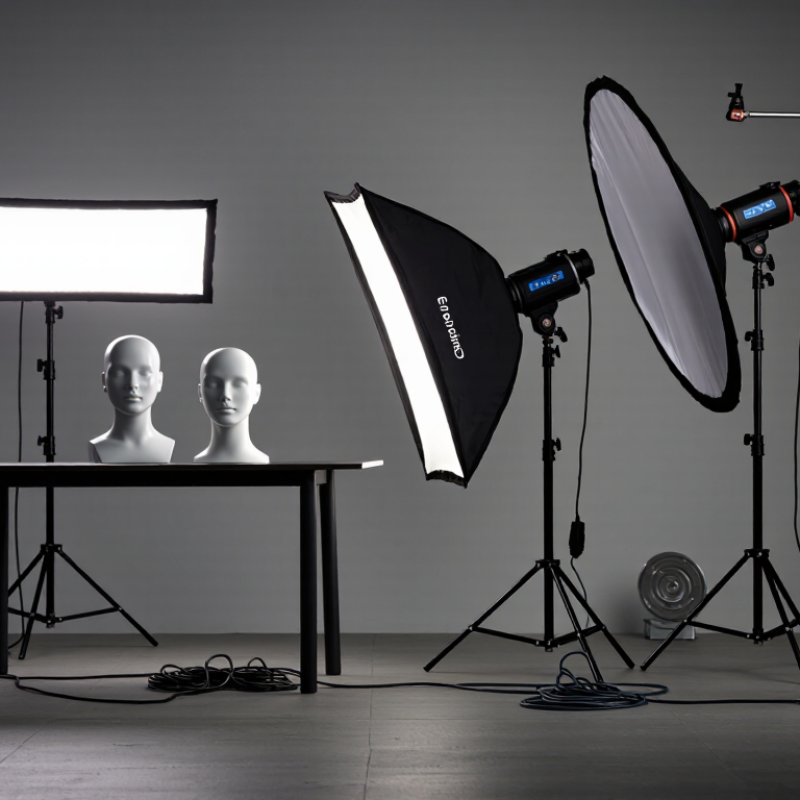
Why Choose Between Continuous Light and Flash for Photography?

How Continuous Lighting Works in Photography

Continuous lighting stays on while you compose, focus, and expose a photograph. You can see shadows change as you move a lamp or reflector. A mug near a window, for example, may show a sharp shadow on one side and a soft highlight on its rim. The light’s size and distance affect that contrast. A large source close to the subject usually creates softer transitions; moving it farther away often makes the light feel harder and dimmer.

Because the light remains visible, you can judge its effect before pressing the shutter. Your camera records that light through shutter speed, aperture, and ISO. If the scene looks dim, a slower shutter speed may help, but it can blur a moving subject. Continuous lamps also produce heat, and some may flicker at certain settings. Results can vary, so check a test frame rather than relying only on the preview. It is easy to overlook a distracting shadow until it appears in the image.

Tips: Place a desk lamp about an arm’s length from a still subject, then move it gradually. Watch the shadow edge on a plain wall. Keep the camera steady, and take one test shot. A reflector can brighten the dark side. Sometimes it helps less than expected.

How Flash Lighting Works and When It Is Used

Flash lighting works by releasing stored energy in a brief burst. That burst may be much shorter than the camera’s exposure, helping freeze a moving hand or a splash of water. The result depends on flash duration and ambient light, though; flash does not automatically stop every subject. Its output can be adjusted through power, distance, and modifiers such as a softbox or a nearby wall. A bounce can soften harsh shadows and make portraits feel more natural.

Tips: Start with low flash power and take a test frame. Move the light closer for softer, stronger illumination. Watch the background, too. If it turns nearly black, raise the ambient exposure or add light to the scene. Keep the flash within your camera’s sync settings to avoid dark bands.

Flash is useful for portraits, events, and product photographs when daylight is weak or motion needs control. It can also add a subtle lift to a face outdoors. Continuous light remains easier to judge by eye, especially for video or quick setup changes. It is tempting to call flash the more powerful choice, but power alone does not make a better image. A small adjustment in angle can matter more than another burst of output.

Comparing Light Output, Motion Control, and Preview

Continuous light and flash differ most in output, motion control, and how confidently you can preview a frame. CIE 018:2019 defines illuminance in lux, giving photographers a common unit for comparing continuous sources at the subject. Take a meter reading at the face, not beside the lamp. Flash is often assessed by exposure at a set distance and power, so compare actual readings rather than watt-seconds alone. A bright-looking modeling lamp can still deliver less exposure than a brief flash.

Motion changes the calculation. At 1 metre per second, a subject travels about 20 millimetres during a 1/50-second exposure, but only 1 millimetre at 1/1000 second. Those figures are simple distance-over-time calculations, not laboratory test results. Flash can freeze movement when its effective pulse is short; continuous light needs a fast shutter, which may require a higher ISO or wider aperture. ISO 12232:2019 specifies methods for determining digital-camera ISO speed and exposure index, useful when comparing those trade-offs. Continuous light offers immediate visual feedback on shadows and reflections. Flash provides a preview lamp, but it may not show the final pulse precisely. I still find that easy to misjudge. Check a test frame. When matching mixed light, meter the subject and review the histogram; the screen can make a dim preview look convincing.

Why Choose Between Continuous Light and Flash for Photography?

A practical comparison of typical light output, motion control, and preview experience.

Ratings are qualitative (1 = lower, 5 = higher), not standardized measurements. Flash can deliver a brief, high peak of light that helps freeze motion; continuous light stays visible while composing, making its effect easier to preview. Actual output and flash duration vary by equipment and settings.

Choosing a Lighting Type for Different Photography Genres

Why Choose Between Continuous Light and Flash for Photography?
Choosing a Lighting Type for Different Photography Genres

Continuous light suits genres where seeing the effect before shooting is useful. For food photography, a soft lamp beside a plate reveals how shadows fall across glossy sauce. In video portraits, it also keeps illumination steady while the subject moves. That matters. However, bright continuous sources can feel warm or intrusive during a long session, and they may struggle to overpower daylight.

Flash is often practical for portraits, weddings, and fast-moving subjects. A brief burst can freeze a dancer’s movement or brighten a face beneath a dark reception tent. Flash also gives photographers more control over ambient light. It takes practice, though. I once adjusted flash power without checking the room light, and the background turned unexpectedly dull. That mistake changed the mood.

For sports, flash may be unsuitable when the venue restricts it, so check the setting before shooting. For product work, either option can shape a clean highlight on glass; the best choice depends on the subject and pace. Try both on the same scene. Compare skin tone, shadow edges, and how quickly you can work. The “right” light is not always the one that looks best on the camera screen.

Considering Equipment, Power, and Workflow Needs

A lighting choice starts with the room and the gear you can carry. Continuous lights show shadows and reflections in real time, which helps when positioning a subject beside a window or checking catchlights in someone’s eyes. They also need space, stands, and often a reliable power supply. In a small room, heat and tangled cables can become part of the setup. Not ideal.

Flash units are compact and can overpower bright ambient light, useful for freezing movement or shaping a portrait in daylight. But they need compatible triggers, test frames, and time to adjust. Their modeling lamps may not show the final result exactly, so the first exposure can be wrong. I still find that easy to underestimate.

Power and workflow matter as much as output. Continuous fixtures draw energy for as long as they run, while battery-powered options need monitoring during longer sessions. Flash uses energy in short bursts, but recycling time can interrupt a fast sequence. For a product shoot, a plugged-in continuous light may make small label adjustments painless. For outdoor portraits, flash can provide more control without carrying a large lamp. Neither option is effortless; the better fit depends on the pace, location, and tolerance for retakes.

Why Choose Between Continuous Light and Flash for Photography? — Considering Equipment, Power, and Workflow Needs

Consideration Continuous Light Flash Best Fit
How the light works Produces light continuously while switched on, so its effect is visible before the exposure. Releases a brief burst of light when triggered, usually during the exposure. Continuous light for a visible, immediate preview; flash for brief, high-intensity illumination.
Exposure and output Exposure is affected by light output, distance, aperture, shutter speed, and ISO. A longer shutter speed can increase the recorded light, subject to motion and flicker considerations. A short burst can deliver substantial light during the exposure. Flash exposure is mainly controlled by flash output, aperture, ISO, and distance; shutter speed also affects ambient light within sync limits. Continuous light can suit slower, controlled scenes; flash can suit situations that need more light within a short exposure.
Freezing motion Motion is primarily limited by the camera’s shutter speed and the available continuous-light level. A sufficiently brief flash duration can help freeze subject motion, particularly when ambient light contributes little to the exposure. Flash for fast-moving subjects; continuous light can work when the shutter speed is high enough and output is adequate.
Preview and focusing Shows light direction, shadows, and reflections in real time, which can make placement and focusing more intuitive. Modeling lamps, when available, provide a preview, but their appearance may differ from the final flash exposure. Continuous light for a direct visual preview; flash when the photographer is comfortable judging or testing the result.
Power use and heat Draws power for as long as it is on. Power needs and heat vary with the light’s design, output, and operating time. Uses energy in bursts and typically has a lower average draw between exposures, though recycling time and battery capacity matter during rapid shooting. Flash for intermittent still photography; continuous light for sustained illumination, with power and heat planned for the session.
Equipment and setup Often requires a compatible power source and may need stands, modifiers, and heat-aware placement. Some fixtures also need diffusion to soften the light. Requires a flash unit and a way to trigger it; off-camera use may add stands, modifiers, and wireless or wired triggering equipment. Choose based on the equipment already available, portability needs, and how much setup the shoot allows.
Ambient-light control Remains on throughout the exposure, so it combines with ambient light and can be affected by room lighting. Can dominate a still-photo exposure when its burst is strong relative to ambient light; shutter speed can adjust ambient contribution within the camera’s flash-sync constraints. Flash when stronger separation from ambient light is needed; continuous light when blending with existing light is useful.
Video and mixed media Suitable for video because it illuminates the scene continuously. Conventional photographic flash cannot provide continuous illumination for video recording. Continuous light for video or photo-and-video sessions; flash for still photography.
Typical workflow Adjust the light while watching the scene, then capture or record. The workflow can be straightforward for small sets and changing compositions. Position and meter or test the light, take a frame, and adjust output or placement as needed. Recycle time may affect the pace of shooting. Continuous light for fast visual adjustments; flash for still-photo workflows where test shots and burst control are acceptable.

Practical note: Results depend on the specific light, modifier, camera settings, subject distance, and ambient conditions. Compare usable light at the subject—not just rated power—when choosing equipment.

FAQS

When is continuous light useful for photography?

It helps when you need to see shadows before taking a picture. A soft lamp beside a plate can reveal glossy sauce and shifting highlights.

Does continuous light work well for video portraits?

Yes. It stays on while a subject moves, keeping illumination steady. Long sessions may feel warm, though.

When is flash a practical choice?

Flash can freeze a dancer’s movement or brighten a face under a dark reception tent. It also helps control ambient light.

Can flash make a scene look dull?

It can. If flash power is adjusted without checking room light, the background may lose brightness. I have made that mistake.

Which lighting type is better for product photography?

Either can shape a clean highlight on glass. Continuous light makes small label adjustments easier; flash may suit a faster workflow.

What should photographers check before using flash at a sports venue?

Check the venue’s rules and conditions first. Flash may not suit every setting.

What equipment and setup needs come with continuous lights?

They need space, stands, and often a dependable power supply. In a small room, heat and tangled cables can complicate setup. Not ideal.

What can make flash challenging during a shoot?

Triggers, test frames, and adjustments take time. Recycling can interrupt a fast sequence, and the first exposure may be wrong. Easy to miss.

Conclusion

Continuous lighting stays on while you shoot, making it easy to see how light falls on a subject, how shadows form, and how adjustments affect the scene. Flash delivers a brief burst of light, often providing greater peak output and helping freeze motion, but its effect may be less intuitive to preview without test shots or modeling light. Comparing these options means considering output, motion control, and how much real-time visual feedback your workflow requires.

To decide how to choose between continuous light and flash for photography, consider the subject and setting. Continuous light can suit video, portraits, and situations where visible light helps guide the subject, while flash may be useful for fast-moving scenes or when strong illumination is needed for a short exposure. Equipment size, power sources, setup time, portability, and shooting pace also matter. The best choice depends on the results you want and the practical demands of each photography genre.

Sienna

Sienna

Sienna is a skilled marketing professional with a deep expertise in our company’s core products and services. With a passion for innovation and detail, she plays a pivotal role in crafting insightful blog posts that not only highlight the unique features of our offerings but also provide valuable......