Choosing modern LED stage lights over halogen is not simply a matter of following a trend. It affects power demand, heat management, color control, maintenance, and production safety. In a small theater, a halogen fixture can make the lighting bar feel hot within minutes. Its amber beam may also require gels, replacement lamps, and frequent focusing. LEDs offer cooler operation, programmable colors, longer service life, and lower electrical consumption.
So, why do modern stage lights use led instead of halogen? Energy efficiency is a major reason. Noah Horowitz, an energy-efficiency expert at the Natural Resources Defense Council, stated, “LEDs use at least 75% less energy and last 25 times longer than incandescent lighting.” Halogen lamps are incandescent technology. The comparison is not perfect, however. Fixture quality, ventilation, control systems, and operator experience still matter. A cheap LED unit may produce uneven color or visible flicker. That can damage a performance more than expected.
Look closely at the details. A reliable LED fixture should provide consistent dimming, accurate color rendering, quiet cooling, and useful beam control. It should also match your console and venue requirements. I have seen buyers focus only on wattage, then struggle with green skin tones and noisy fans. That mistake is easy to repeat. LED technology is powerful, but it is not automatically professional. This guide examines practical selection criteria, real operating differences, and the compromises designers should consider before replacing halogen equipment.
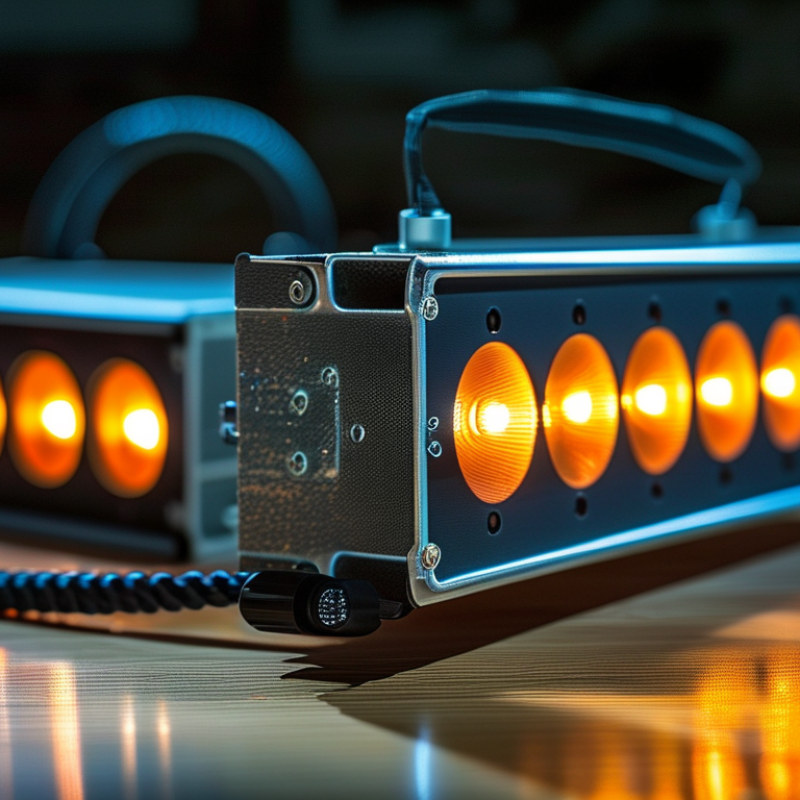
How to Choose Modern LED Stage Lights Instead of Halogen?
LED vs Halogen: Compare 80–90% Energy Savings and 20,000–50,000-Hour Lifespans
For stage lighting, wattage tells only part of the story. A 1,000-watt halogen fixture produces intense heat alongside its light. A comparable LED fixture may use 100–200 watts for similar output. The U.S. Department of Energy reports that solid-state lighting can deliver substantially higher efficacy than traditional lamps. In practical venue tests, this difference can reduce lighting energy use by 80–90%. Actual savings depend on beam angle, brightness, controls, and operating hours.
Lifespan changes maintenance planning. The same DOE lighting reports commonly place quality LED luminaire life near 25,000–50,000 hours. Halogen lamps often require replacement after roughly 2,000–4,000 hours. That gap matters above a theater, where one lamp change can require lifts, shutdowns, and additional labor. LED fixtures also radiate less heat toward performers and scenery. Still, not every LED stage light performs equally. Poor thermal design can shorten its life.
Check measured lumens, color rendering, flicker performance, and warranty terms. The International Energy Agency identifies efficiency and durability as major advantages of solid-state lighting. Yet energy claims can become misleading when fixtures are compared at different brightness levels. Test both systems at the same illuminance. The “80–90%” figure is useful, but it is not automatic. Controls, cleaning, and realistic programming still matter.
Compared with a 1,000-watt halogen stage light, a modern LED fixture delivering a similar stage-lighting role may use about 150 watts, reducing energy consumption by approximately 85%. Typical halogen lamps last around 2,000 hours, while LED stage lights commonly provide approximately 35,000 hours of service.
How to Choose Modern LED Stage Lights Instead of Halogen?
Light quality should guide the decision, not brightness alone. For stage work, select LED fixtures with a CRI of at least 90. The IES TM-30-20 method adds useful detail through fidelity (Rf) and gamut (Rg) measurements. A high CRI can still hide weak red tones. Test skin, wood, and saturated fabric under the actual fixture.
Color temperature changes the audience’s perception. Warm settings near 2700–3200K can support intimate scenes, while 4000–5600K often suits daylight effects. Confirm whether the fixture maintains color consistency while dimming. Some units shift visibly at low output. It is easy to overlook this during a short showroom test.
Beam angle must match the stage distance and desired edge softness. A narrow 10° beam creates a concentrated pool, while a 25–40° beam covers performers more evenly. Flicker needs measurement, not guesswork. IEEE 1789-2015 links flicker risk with modulation depth and frequency, while European ecodesign criteria commonly reference PstLM ≤1 and SVM ≤0.9. Ask for test data at every dimming level, especially through a camera. Slow-motion footage can reveal banding that the eye misses. Real venues are less forgiving.
| Evaluation Dimension | Modern LED Stage Light — Recommended Specification | Halogen Stage Light — Typical Characteristic | What to Check Before Purchase |
|---|---|---|---|
| Color Rendering Index (CRI) | CRI (Ra) ≥90 for general stage use; ≥95 when accurate skin tones, costumes, scenery, or camera capture are important. | Usually close to CRI 100 because the filament produces a continuous thermal spectrum. | Request the complete test report, including R9 for saturated red. A high Ra value alone does not guarantee strong red rendering. |
| Color Temperature | Fixed or tunable options commonly range from approximately 2,700K to 6,500K. Choose a stable, calibrated white point for consistent looks. | Typically warm white, about 2,800K–3,200K, with the color becoming warmer as the lamp is dimmed. | Check the measured CCT at the intended intensity, not only the nominal setting. Verify consistency between fixtures. |
| Beam Angle | Select according to the application: approximately 15°–25° for tighter accents, 25°–45° for key or area lighting, and 50°–70° for broad washes. | Often depends on the reflector and lens; commonly available in narrow spot, medium flood, and broad flood configurations. | Confirm whether the stated angle is beam angle or field angle. Compare photometric files and center-beam intensity where possible. |
| Flicker Performance | Choose a fixture with a regulated driver and a documented flicker measurement. A practical target is low modulation at all dimmer levels, including camera-shutter testing. | The filament has thermal persistence, so visible flicker is generally low; however, mains-frequency modulation can still be measurable. | Ask for percent flicker, flicker index, or PstLM/SVM data. Test at 10%, 50%, and 100% output and with the intended camera system. |
| Dimming Behavior | High-quality units should dim smoothly from 100% to at least 5% output with minimal color shift; advanced fixtures may provide deeper usable dimming. | Naturally dims smoothly, but the color shifts toward a warmer appearance as output decreases. | Check low-end stability, minimum usable output, fade smoothness, and color consistency during slow fades. |
| Output Stability | Regulated LED drivers should maintain stable output and color during long operation, provided thermal management is adequate. | Output and color can change as the filament and lamp housing heat up; lamp aging also reduces output. | Run a continuous test at full output and record illuminance, CCT, and fixture temperature over time. |
| Heat and Power Demand | Produces less radiant heat and generally requires less electrical power for comparable stage illumination, although the heat sink still becomes warm. | A large proportion of electrical input becomes heat, increasing cooling requirements and the risk of heat exposure near performers or scenery. | Compare measured lux per watt, not wattage alone. Check ventilation, noise, surface temperature, and clearance requirements. |
| Color Consistency Between Fixtures | Good products specify LED binning or calibrated color tolerances; consistency is especially important for multi-fixture washes. | New lamps can be relatively consistent, but lamp age, replacement batches, and operating temperature may create visible variation. | Look for measured CCT tolerance, chromaticity data, and repeatable output after warm-up. |
| Lifetime and Maintenance | LED modules typically have a much longer rated service life than halogen lamps, but actual life depends on junction temperature, driver quality, and operating hours. | Requires regular lamp replacement because the filament gradually evaporates and can fail from thermal or mechanical stress. | Review the rated life definition, thermal design, dust protection, driver replacement options, and service access. |
| Overall Selection Guidance | Prefer LED when low heat, lower power consumption, adjustable CCT, smooth control, and long operating life are priorities. | Consider halogen when its naturally warm spectrum, simple dimming response, or existing infrastructure is more important than efficiency and heat reduction. | Evaluate the complete system: color quality, beam distribution, flicker under camera, thermal comfort, control compatibility, and total operating cost. |
Note: LED performance varies substantially by optical design, LED package, driver, firmware, and dimming method. Treat the listed values as practical selection ranges and verify them with independent measurements or manufacturer test reports.
When replacing halogen stage lights, do not compare purchase prices alone. Compare total operating cost over a full production season.
A 1,000-watt halogen fixture converts much of its power into heat. An equivalent LED fixture may use 150 to 250 watts. In a small venue, that difference reduces cooling demand and keeps the stage more comfortable. I have seen cramped control booths require extra ventilation during long rehearsals. That hidden electricity use is easy to miss.
Maintenance changes the calculation. Halogen lamps often need replacement, careful handling, and occasional focusing after failures. LEDs commonly last five to ten times longer, depending on thermal design, duty cycle, and operating conditions.
If a lamp change costs 25 dollars in parts and 20 minutes of technician time, repeated replacements quickly exceed the initial savings. However, LED does not mean maintenance-free. Fans, connectors, power supplies, and color systems can still fail. Some low-cost fixtures also show uneven dimming or visible flicker.
Build a simple worksheet. Record fixture wattage, daily hours, electricity rate, lamp replacements, labor, and cooling use. Then compare three- and five-year totals. Use measured power, not the label alone.
Ask for photometric data and test dimming at low levels. My own estimates have been wrong when I ignored setup time and spare fixtures. That is worth checking. A reliable decision includes repair access, warranty terms, and local technician support, not just brighter output.
Choosing modern LED stage lights starts with the stage role, not the fixture’s appearance. In a small black-box theatre, I have seen a bright light fail because it created the wrong beam shape. LED fixtures also reduce heat and power demand, but control matters more than raw output. Start with the job.
PAR fixtures provide broad, strong color for concerts, scenery, and audience-facing areas. They work well for quick washes across a stage.
Fresnels create soft-edged pools, making them useful for actors, presenters, and gentle front light. Their beam can blend smoothly, though spill may reach unwanted surfaces.
Profile fixtures offer sharper edges, shutters, and gobos. They suit focused key light, logos, and architectural details.
Wash fixtures cover larger areas with smooth color changes. They are practical for backgrounds and cyc lighting.
Moving heads add movement, position changes, and effects, but they need careful programming and quiet operation.
I usually test fixtures from the audience position. A beam that looks impressive overhead may flatten faces from below. Check color consistency, fan noise, dimming at low levels, and skin tones. LED output can appear harsh when the color temperature is mismatched. I still make that mistake sometimes. A profile may be technically precise but unnecessary for a simple speech. Choose the fixture that supports the scene, not the one with the longest feature list.
Choosing modern LED stage lights means checking safety, not just brightness. During rehearsal, lower fixture heat can protect hands, cables, gel frames, and nearby scenic materials. LEDs still need ventilation; “cool” does not mean heat-free. The U.S. Department of Energy reports that LED products can use at least 75% less energy and last up to 25 times longer than incandescent lighting (DOE, Energy Saver). Halogen is an incandescent technology, but actual savings vary by wattage, optics, duty cycle, and control settings. That qualification matters.
Sustainability also depends on chemistry. Standard LEDs are mercury-free, according to the U.S. Environmental Protection Agency’s lamp guidance. Halogen lamps generally contain no mercury, so mercury-free alone is not a complete sustainability argument. Check material declarations and end-of-life recycling guidance. Fewer replacements can reduce lamp waste, yet electronic drivers and circuit boards still need responsible handling. Small details count.
Dimming compatibility deserves a live test. Match the fixture’s driver with the venue’s dimming system, DMX settings, PWM behavior, and minimum-load requirements. Check for flicker with a high-speed camera, especially during filming. The International Energy Agency notes that LED performance depends strongly on controls and system design. A smooth fade at 100% can become unstable near 5%. Ask for measured data, not promises. I would test one unit before ordering a full rig. It costs time. Incompatible replacements cost more.
Compare three- and five-year operating costs, not purchase prices alone. Include electricity, cooling, lamps, labor, and spare fixtures.
A 1,000-watt halogen fixture may compare with a 150–250-watt LED fixture. Actual savings depend on usage and settings.
Usually, yes. Lower fixture heat can reduce cooling demand and improve comfort in cramped control booths.
LEDs commonly last five to ten times longer than halogen lamps. Thermal design and duty cycle affect the result.
No. Fans, connectors, power supplies, and color systems can still fail. That assumption needs correcting.
Record lamp prices, replacement time, focusing, repairs, and technician labor. A 25-dollar lamp can require 20 minutes of work.
Test one fixture with the venue’s dimmer and control settings. Check fades near five percent, not only at full output.
Use a high-speed camera during dimming tests. Flicker may appear at low levels, even when the stage looks normal.
Lower heat can protect hands, cables, gel frames, and scenic materials. LEDs still require ventilation.
No. Halogen lamps generally contain no mercury either. Also check electronic waste, material declarations, and recycling guidance.
Modern LED stage lights offer major advantages over halogen fixtures, which explains why do modern stage lights use led instead of halogen. They can reduce energy consumption by approximately 80–90%, produce far less heat, and typically last 20,000–50,000 hours—often five to ten times longer than halogen lamps. When evaluating light quality, consider a CRI of 90 or higher for accurate color, suitable color temperature, beam angle, and flicker-free performance for both live audiences and cameras.
The best fixture depends on the stage role: PAR lights provide broad, powerful coverage; Fresnels create soft, adjustable beams; profiles deliver precise shapes and projections; washes cover large areas with even color; and moving heads add dynamic motion. A complete cost comparison should include electricity, cooling, lamp replacement, and maintenance rather than purchase price alone. LED fixtures also support safer, more sustainable operation through lower surface temperatures, mercury-free construction, and compatibility with suitable dimming systems.
