Choosing COB LED or panel video lights in 2026 is not just a brightness decision. It affects how shadows fall, how quickly you can shape a setup, and how much space your kit needs. A COB light puts a concentrated source behind a reflector or modifier. A panel spreads light across a wider face, often making close-up lighting feel softer. That is the basic distinction, but real results depend on the modifier, distance, room, and subject.
If you are asking what is the difference between cob led and panel video lights, this guide explains the practical trade-offs without treating either option as a universal winner. It compares beam shape, softness, output, portability, power, controls, and common use cases. Specs matter. So does setup time. A COB with a softbox can produce flattering light, but the added modifier takes space and may slow a quick shoot. A panel can be convenient, though its built-in diffusion does not guarantee soft light when placed far away. Details vary between models, so check measured output and manufacturer specifications rather than relying on labels alone. Small differences matter. We also consider budget and room constraints, because a compact desk setup and a small interview kit have different needs. The choice may still feel imperfect; priorities often compete. Use the comparisons to match the light to your actual shooting conditions, then verify the result with a test shot before committing.
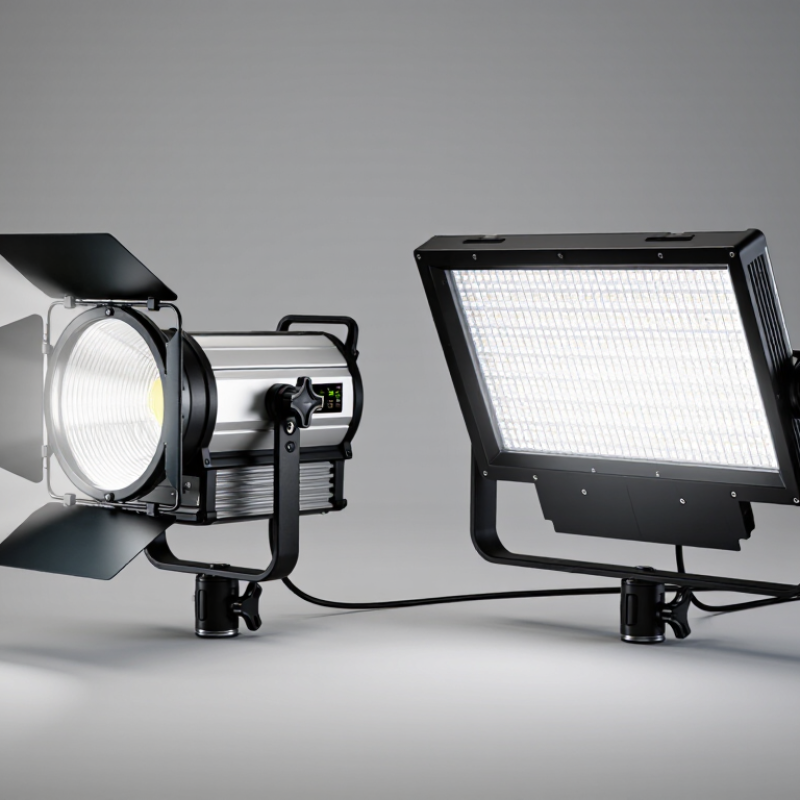
COB means “chip on board”: many LED chips are mounted closely on one circuit board and covered by a shared phosphor layer. The result is a compact, bright light source that behaves more like a single point than a broad glowing surface. Add a reflector or lens, and its beam can be shaped for a defined pool of light. It can also work with softboxes and other modifiers. Small source, strong output.
A panel video light spreads LEDs across a wider, flat face. Diffusion in front of the LEDs softens and broadens the light, which can help illuminate a person evenly at close range. Panels are often slim and easy to position near a camera or in a tight room. Their built-in diffusion is convenient, though some panels still produce visible shadows or uneven color at the edges.
The distinction is about how light is arranged and delivered, not simply which type is “better.” A COB unit can become soft with a large diffuser, while a panel can be made more directional with grids or accessories. That comparison is useful, but not absolute. I’ve found that distance, modifier size, and the room’s reflective walls can change the result more than the fixture label suggests. Try both at the actual shooting distance. A quick test reveals a lot.
COB lights use a compact LED chip, so their output often forms a concentrated beam. With a reflector, they can deliver strong illumination onto a small area, such as a face against a darker background. A narrow beam can also create sharper shadows on a wall. Add a softbox or diffusion, and the light spreads out, but some output is lost along the way. Not always.
Panel lights have a wider emitting surface. Their light usually covers a larger area with softer transitions between highlights and shadows, which can help when lighting two people or a broad backdrop. Yet a panel is not automatically brighter or softer. Output depends on its size, LED arrangement, diffusion, and distance from the subject.
For a useful comparison, place both fixtures at the same distance and measure illumination at the subject with a light meter. Check the center and edges of the beam, not only the brightest spot. At two meters, a COB may create a bright central patch while a panel gives more even coverage. That distinction is useful, but not absolute: grids, reflectors, and diffusion can change the beam substantially. I would not judge either type by wattage alone.
| Comparison Dimension | COB LED Video Light | Panel Video Light | Practical Choice |
|---|---|---|---|
| Light-emitting design | A compact LED chip-on-board source creates a relatively concentrated source of light. | Many LEDs are spread across a larger emitting surface, often behind a diffusion layer. | Choose COB for a compact source; choose a panel when a broad emitting surface is useful. |
| Output and intensity | Often produces high illuminance in a focused direction, especially with a reflector or lens. | Spreads light over a wider area, so the light reaching a subject depends on panel size, power, distance, and diffusion. | Compare measured illuminance at the same distance and with equivalent modifiers. Wattage alone does not establish brightness. |
| Beam shape | With suitable optics, the beam can be shaped from relatively narrow to broad. A reflector can create a defined pool of light. | Typically delivers a broad, even wash; the exact spread depends on the panel's optics and diffusion. | Choose COB when you need a more controllable beam; choose a panel for broad coverage. |
| Softness and shadows | Used directly, it can create more defined shadows. A softbox or other large modifier can soften the light. | Its larger emitting area can produce softer shadows at the same subject distance, particularly when used close to the subject. | For soft light, source size relative to the subject matters; moving a light closer or adding diffusion changes the result. |
| Light shaping | Often works with reflectors, projection attachments, softboxes, grids, and other compatible modifiers. | Commonly used as a broad source; diffusion and grids may be available, depending on the fixture design. | Check mount and accessory compatibility before choosing a fixture or modifier. |
| Typical use cases | Interviews needing a key or backlight, product highlights, controlled accent lighting, and setups that benefit from directional light. | Interviews, fill light, small-set lighting, and situations where a broad source is convenient. | Choose based on the required beam, subject size, working distance, and available space. |
| Setup considerations | A reflector or softbox may be needed to achieve the desired beam or softness; larger modifiers require space. | Often quick to position as a broad source, but the fixture's size and placement can affect coverage and reflections. | For either type, consider power, cooling noise, dimming behavior, color accuracy, and mounting needs. |
| Best starting point | Choose COB when directional output and a flexible modifier system are priorities. | Choose a panel when broad, convenient coverage and a larger emitting surface are priorities. | When possible, test both at the intended distance with the modifiers you plan to use. |
Measurement note: Actual illuminance and beam spread vary by fixture, power setting, distance, optics, and modifier. For a fair output comparison, use the same measurement distance and document whether reflectors, diffusion, or other modifiers are installed.
Choose a COB light when the shot needs a defined beam: a bright window shaft, a rim on a person, or a small pool of light on a product. Its compact emitting area works well with reflectors, softboxes, and projection attachments. That flexibility matters on a small set, though modifiers add setup time. Measure illuminance at the subject, not just the fixture’s advertised output; distance and diffusion can change the result sharply.
Panel lights suit broad, close sources for interviews, tabletop work, and gentle fill. Their larger face can spread light across two people with less modifier setup. They may be awkward in tight spaces, and a nearby panel can look flat unless you add direction with flags or adjust its angle. For either type, check skin tones and color consistency on camera. The IES TM-30-20 method evaluates 99 color samples and reports fidelity (Rf) and gamut (Rg), offering more detail than a single CRI value. It is a useful comparison tool, not a guarantee of pleasing footage. I’d still test the actual fixture, dimming level, and camera settings before a shoot; specifications do not reveal every color shift or flicker issue.
Choosing between a COB LED and a panel starts with the scene, not the product label. A COB source creates a concentrated beam, which can produce crisp shadows and work well with reflectors or softboxes. A panel spreads light across a wider area and may create softer light close to a subject. But softness depends on the light’s apparent size and distance, not fixture type alone. Move a small panel farther away, and shadows can become harder.
Compare output at your working distance, not just advertised wattage. Check color accuracy and consistency across brightness levels, plus fan noise, heat, power options, and controls. If you shoot slow motion, test for flicker at your intended frame rate and shutter setting. Specifications cannot replace a camera test. Small details matter. In a tight interview space, a quiet, dimmable fixture may matter more than peak brightness. For product work, beam control and repeatable color can save time.
Consider how the light fits your kit. Does the COB need modifiers you already own? Will a panel fit above a desk without blocking the lens? Compare setup time, cable reach, mounting points, and room for diffusion. It is tempting to choose by output numbers alone. That is incomplete. Wall color, ceiling height, and subject distance can overturn a tidy spec-sheet decision. Testing both in the actual room may reveal something the numbers miss.
In 2026, choose by the shot, not the fixture shape. A COB light creates a compact, directional source; add a reflector or softbox for sharper control or softer shadows. It suits window-like beams, focused key light, and small sets where output matters. A panel spreads light across a wider area, making close-up interviews and quick fill easier. But broad output can spill onto walls and backgrounds. I still find that convenient—until it is not.
Compare measured illuminance at the same distance and with the same modifier. Check color quality, too: IES TM-30-20 evaluates 99 color samples and reports fidelity (Rf) and gamut (Rg), giving more detail than a single CRI figure. Ask for test data at the color temperature and dimming level you will actually use. Flicker also needs a camera test. IEC TR 61547-1 describes flicker measurement methods, but a lamp’s reported result cannot guarantee compatibility with every frame rate and shutter setting. Test your actual camera. Watch skin tones, moving hands, and dimmed output. If you shoot in a tight room, compare spill, fan noise, and how much space each modifier needs—not just the headline wattage.
Compare typical strengths by shooting need. Scores are qualitative fit ratings from 1 (less suited) to 5 (more suited), not measured product specifications; performance varies by light and accessories.
Quick guide: Choose COB lights when you want a directional source and flexible shaping with reflectors or softboxes. Choose panel lights when broad, even illumination and a large diffused source are priorities. Check each light’s output, color accuracy, size, and power options before buying.
COB means “chip on board.” Many LED chips sit close together beneath a shared phosphor layer, creating a compact light source.
A reflector or lens can focus its output into a defined pool of light. This can create crisp shadows on a nearby wall. Add diffusion, and the beam becomes broader, with some light lost.
A panel spreads LEDs across a wide, flat face. Its built-in diffusion often gives people or backdrops more even illumination at close range. Edges can still look uneven.
No. Softness depends on the light’s apparent size and distance from the subject, not just its type. A small panel placed far away may create harder shadows. I have to remind myself of that.
A panel may cover a wide backdrop more evenly. A COB can also work with a large softbox, though this may reduce output. The room changes the result.
Place both lights at the same distance and measure illumination at the subject. Check the beam’s center and edges, not only its brightest spot. Wattage alone can mislead.
Check fan noise, heat, dimming, color consistency, and power options. In a small room, a quiet light may matter more than peak brightness. Small details matter.
Test it with your intended frame rate and shutter setting. Watch the camera footage for flicker. Specifications cannot settle everything. A quick test helps.
COB LED and panel video lights serve different creative needs. A COB light uses a concentrated light source that can produce a strong, directional beam, often shaped with modifiers for focused highlights or controlled shadows. A panel light spreads illumination across a broader surface, creating a wide, even wash that can be useful in compact spaces. Understanding what is the difference between cob led and panel video lights starts with comparing their output and beam shape, not simply their size or appearance.
COB lights are often suited to interviews, product shots, and scenes that benefit from directional lighting, while panels can work well for soft fill, small-room setups, and quick adjustments. Before choosing, consider brightness, color accuracy, beam control, portability, power options, modifiers, and how much setup time your work allows. In 2026, the best choice is the light type that fits your typical shooting distance, space, desired look, and workflow; some creators may find that using both provides the most flexibility.
